


Keratin vs Anti-Frizz Treatment: What Actually Works? MAVA System NYC
Updated: Jul 2

Keratin vs. MAVA Anti-Frizz System NYC: Why Diagnosis Matters More Than the Treatment Name
If you are comparing a keratin treatment with an anti-frizz treatment, you are probably asking a reasonable question:
Which one is better?
At MAVA, we approach the question differently.
Before asking which treatment is best, we ask:
What is the condition of the hair?
Because frizz is not always the problem.
Sometimes the real issue is:
accumulated damage
previous chemical history
incompatible smoothing services
excessive heat exposure
porous highlighted hair
untreated texture imbalance
unrealistic expectations created by marketing
The treatment name matters less than most people think.
Diagnosis matters more.
Why People Compare Keratin and Anti-Frizz Hair Treatments
Clients often arrive after experiencing:
recurring frizz in humidity
loss of smoothness after previous services
dryness after repeated keratin sessions
inconsistent results
heavy coating without true control
Many are simply looking for:
“Something that finally works.”
The challenge is that different treatments behave differently, and not every hair type benefits from the same approach.
What Keratin Treatments Usually Aim To Do
Traditional keratin services are generally designed to:
soften frizz
improve manageability
add temporary smoothness
create a cosmetic coating effect
Some clients respond very well.
Others do not.
Results vary depending on:
formulation
previous processing
porosity
curl pattern
maintenance habits
overall hair health
The problem is not keratin itself.
The problem appears when the same solution is applied to every head of hair.
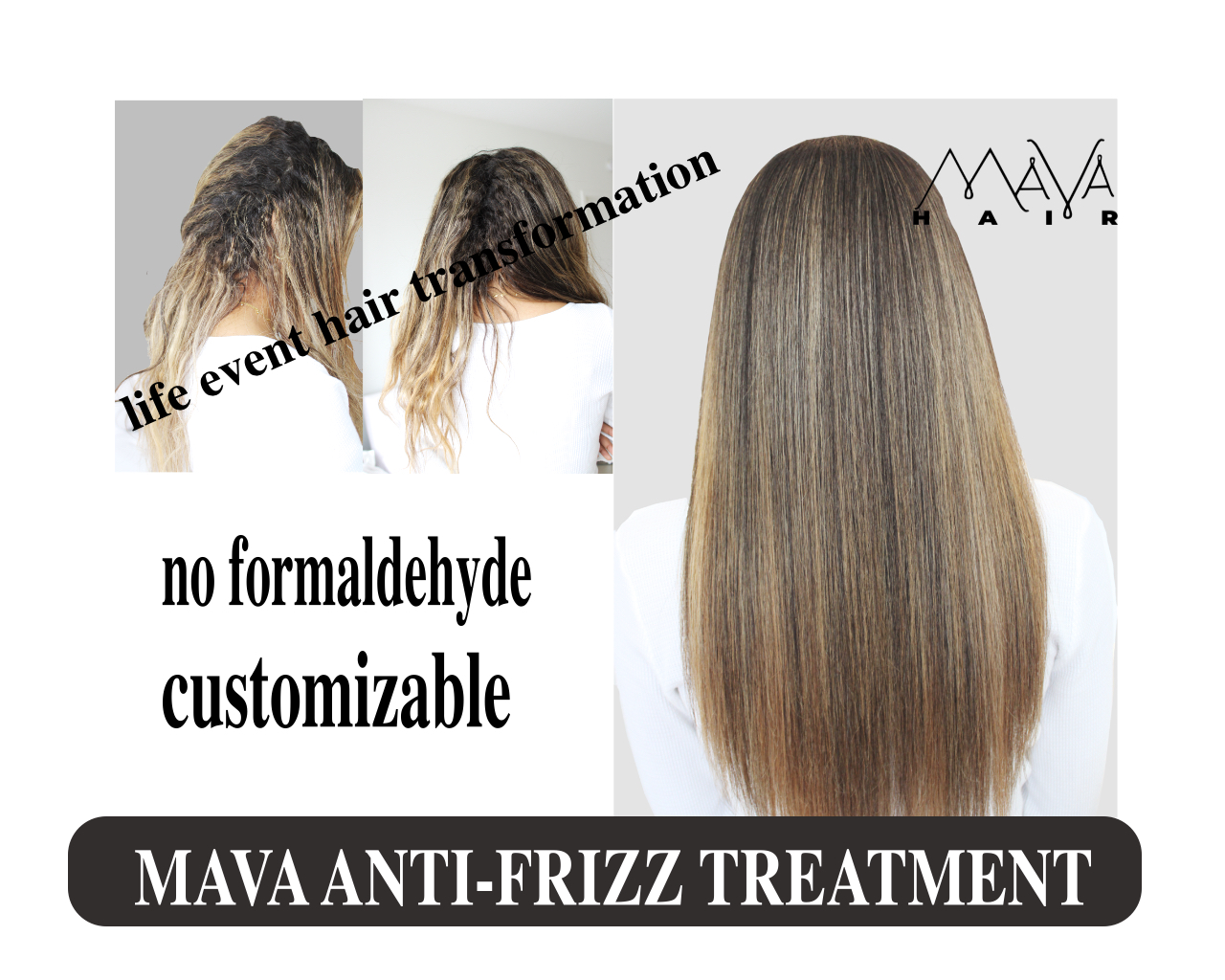
How the MAVA Anti-Frizz System Is Different
The MAVA Anti-Frizz System was developed for clients who often say:
“I’ve tried things already.”“My hair behaves differently.”“Nothing seems consistent.”
The objective is not simply to smooth hair.
The objective is to create:
long-term control
reduced frizz response
predictable behavior
preserved movement
healthier daily management
The treatment can be adjusted depending on:
texture type
curl pattern
previous chemical services
highlighted areas
resistance level
long-term goals
Hair health always comes first.
The Bigger Difference Is Not the Formula
The bigger difference is the process.
At MAVA:
You do not select a treatment.
You enter a diagnostic system.
Recommendations come after evaluating:
Hair history
What has been done before?
Current condition
Healthy? Dry? Porous? Compromised?
Lifestyle
Humidity exposure, styling habits, maintenance reality.
Goals
Straighter? Softer? Looser texture? Frizz reduction only?
Treatment decisions happen after understanding the whole picture.
Not before.
When Keratin May Be Appropriate
Keratin may still be an excellent option when:
hair is relatively healthy
temporary smoothing is preferred
permanent texture changes are not desired
maintenance expectations match the result
Not every client needs MAVA.
Not every client needs permanent anti-frizz control.
The right answer depends on the diagnosis.
When Clients Usually Explore MAVA
Clients often arrive after:
repeated smoothing services
disappointing keratin experiences
humidity frustration
mixed texture management problems
damaged or over-processed hair
wanting more predictability
Many are not looking for stronger results.
They are looking for better decisions.
Frizz Is Not Always A Treatment Problem
This is one of the biggest shifts clients experience.
They arrive asking:
“What should I do?”
They leave understanding:
“What does my hair actually need?”
That change matters.
Because healthy hair is rarely built through random treatments.
It is built through sequence, education, and consistency.
Final Thought
If you are comparing keratin and anti-frizz treatments, you may not need a faster answer.
You may need a better evaluation.
At MAVA, treatment selection comes after understanding the hair.
Not before. Because this is not a menu.
It is a system.
Can Both Approaches Exist In The Same Hair Journey?
Sometimes yes.
There are situations where:
temporary smoothing is preferred
fragile or highlighted areas need different handling
clients move from one stage into another
preservation matters more than straightening
This is why MAVA works through evaluation and staging instead of fixed menus.
Not every head of hair needs the same answer.
Still comparing options?
Learn how the MAVA System works and whether this approach fits your hair history, goals, and condition.
Read article about Best Anti-frizz Treatment in NYC

Comments